
Salt Lick, Kentucky · 1873
All Fifteen Stories
Read the stories without using the interactive picture.
AI-generated narration.
Story One
Feeding the Furnace
On a hot summer afternoon, workers move iron ore, charcoal and limestone up a wooden ramp. As they near the stack’s top, they feel the powerful heat coming from inside the blast furnace. Air pumps blow air inside, feeding a charcoal fire that could reach nearly 3,000 degrees Fahrenheit. Built in 1839, the stone furnace stood idle during the Civil War. It reopened as the Bath Furnace in 1873, but its revival was brief: the final blast came just two years later.
Find this story in the landscape · Sources and Evidence
Inspect the furnace and casting floor
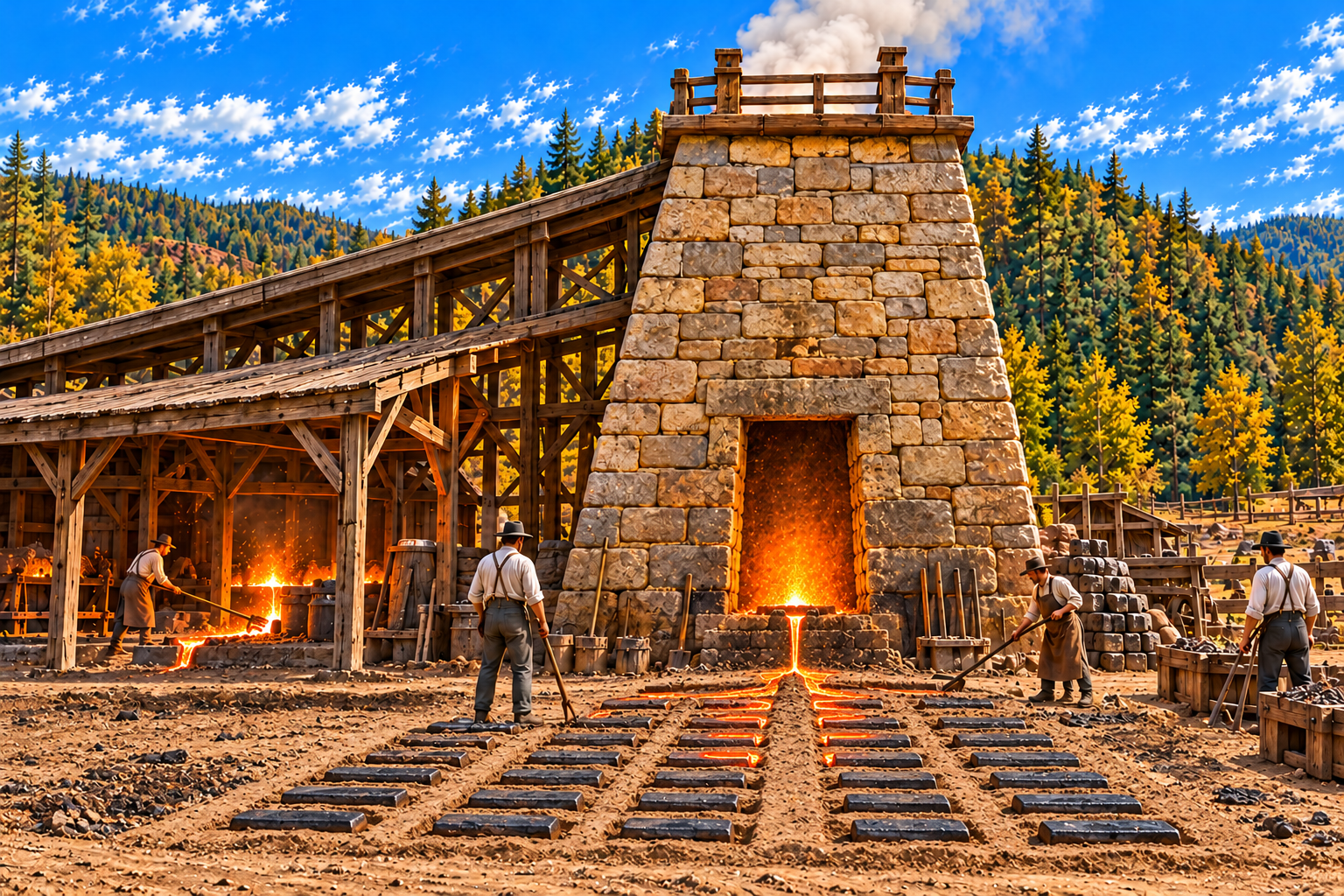
Separate interpretive close-up, not a measured enlargement of the panorama. Tap the picture to open and pinch to zoom.
Story Two
Inside the Fire
Atop the ramp’s charging platform, workers drop measured loads of iron ore, charcoal and limestone into the furnace. No one today knows exactly what the charging ramp looked like, but archaeologists have found stone remains that helped support it. Charcoal supplies fuel, and air pumps supply the air that feeds the fire. Limestone acts as a flux, helping separate impurities from the ore into a waste product called slag. Refined molten iron flows from the bottom of the furnace.
Find this story in the landscape · Sources and Evidence
Inspect the furnace and casting floor
Separate interpretive close-up, not a measured enlargement of the panorama. Tap the picture to open and pinch to zoom.
Story Three
Mining the Ore
Ironmaking began in the surrounding hills. Workers dug iron ore from deposits near the ridge tops, then hauled it down to the furnace. Heated by charcoal and mixed with limestone, the furnace converted the ore into molten iron. Crushed limestone, also mined nearby, acts as a flux. Flux removes impurities from the ore, creating a waste product called slag.
Story Four
Making Charcoal
Charcoal burned hot and left little ash compared with raw wood. The wood used to make charcoal was plentiful in the surrounding hills. By restricting a fire’s air supply, skilled charcoal makers, called colliers, heated the harvested wood slowly, converting it into charcoal. Their work required careful preparation and attention. Too much air could turn the wood to ash. Teams then hauled charcoal to the furnace, where it supplied heat and helped remove oxygen from the iron ore.
Story Five
Making a Home
Close enough to hear the noise and smell the smoke, workers made their homes. An 1866 survey places three main dwellings east of Clear Creek. Archaeologists found the remains of other homes nearby. Chimney stones, window glass, nails and fragments of dishes preserve traces of home life. Before the Civil War, enslaved African American workers may have lived in separate quarters, but their housing at Clear Creek remains unverified.
Story Six
An “Iron Plantation”
Before the Civil War, enslaved Black Americans did much of the iron industry’s hard labor. They mined ore and crushed limestone. They cut timber and made charcoal. Enslaved workers also hauled raw materials and cleared logging roads. In 1839, they likely helped build the Clear Creek Furnace. Its first owners held people in slavery, and Bath County had a large enslaved population. Some may have been hired out to work at the furnace by the enslavers who claimed them. Slavery ended in 1865, before the furnace reopened in 1873.
Story Seven
Wagons, Roads and Beasts of Burden
Road building was essential to ironmaking. Horses, mules and oxen hauled ore, limestone and charcoal. Once the pig iron cooled, wagons likely hauled it to market towns like Maysville, Kentucky. Archaeologists have found old roads, and an 1866 survey says the complex included a wagon-maker’s shop and stables.
Find this story in the landscape · Sources and Evidence
Inspect the pig iron, wagon and company store
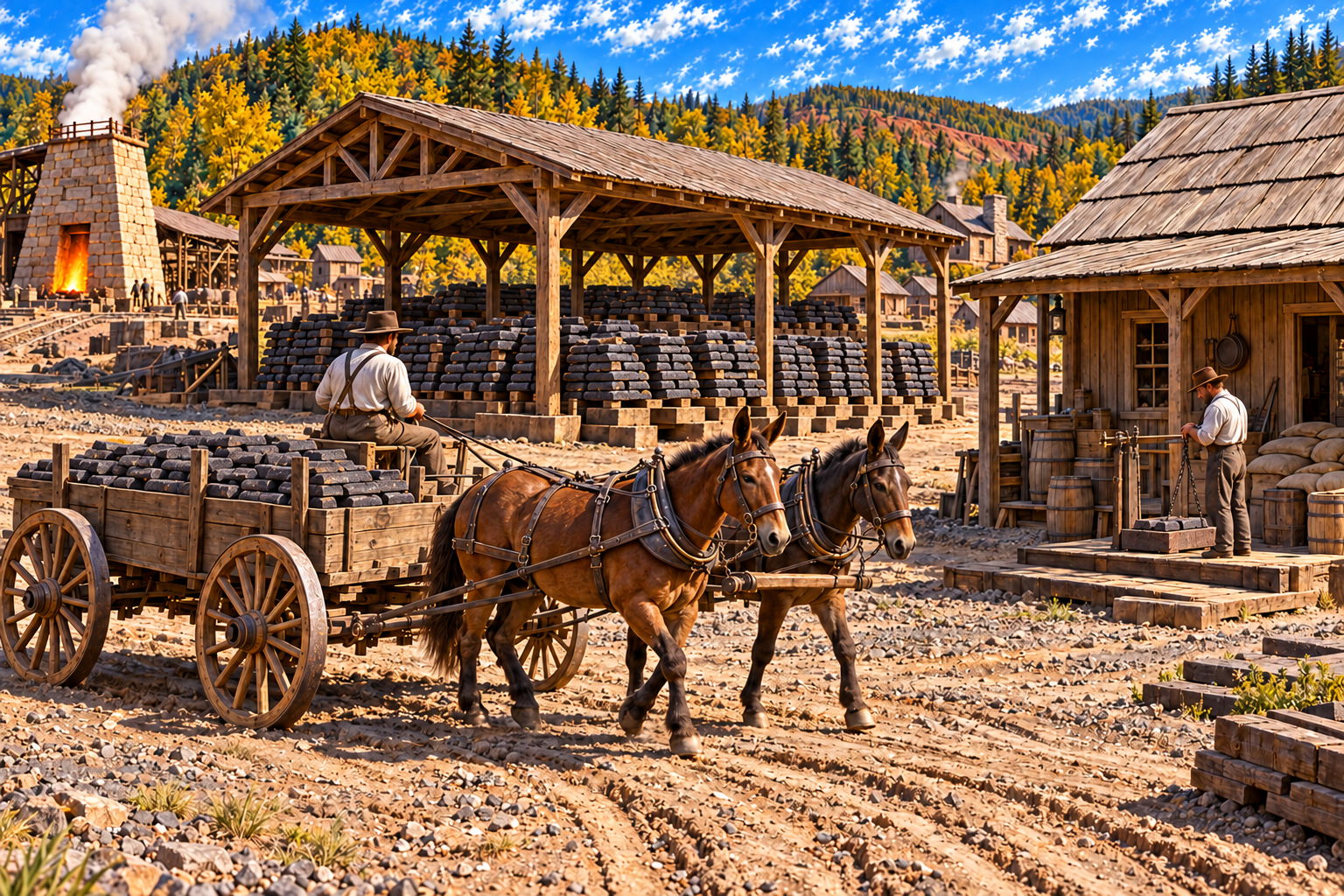
Separate interpretive close-up. Shelter, equipment and loading arrangement are imagined, not measured archaeological evidence. Tap the picture to open and pinch to zoom.
Story Eight
Casting Pigs
Under the shade of a casting shed beside the furnace, workers shape channels in the sand. When molten iron is released from the furnace, it flows through a main channel and settles into smaller sand molds. Ironworkers were reminded of a sow nursing her piglets, giving the cooled bars their familiar name: pig iron. These bars were then transported to foundries, forges and machine shops, where they were made into farm tools, machine parts and sometimes weapons.
Find this story in the landscape · Sources and Evidence
Inspect the furnace and casting floor
Separate interpretive close-up, not a measured enlargement of the panorama. Tap the picture to open and pinch to zoom.
Story Nine
Water, Steam and “The Blast”
Air pumps are essential to a blast furnace. They blow air into the furnace, helping the charcoal fire reach nearly 3,000 degrees Fahrenheit. In our imagined scene, a steam engine powers the air pumps. Water for the boilers comes from a holding tank, refilled by a water-powered pump beside Clear Creek. The boilers turn water into steam to run the engine.
Find this story in the landscape · Sources and Evidence
Inspect the pump house and west-bank workshops
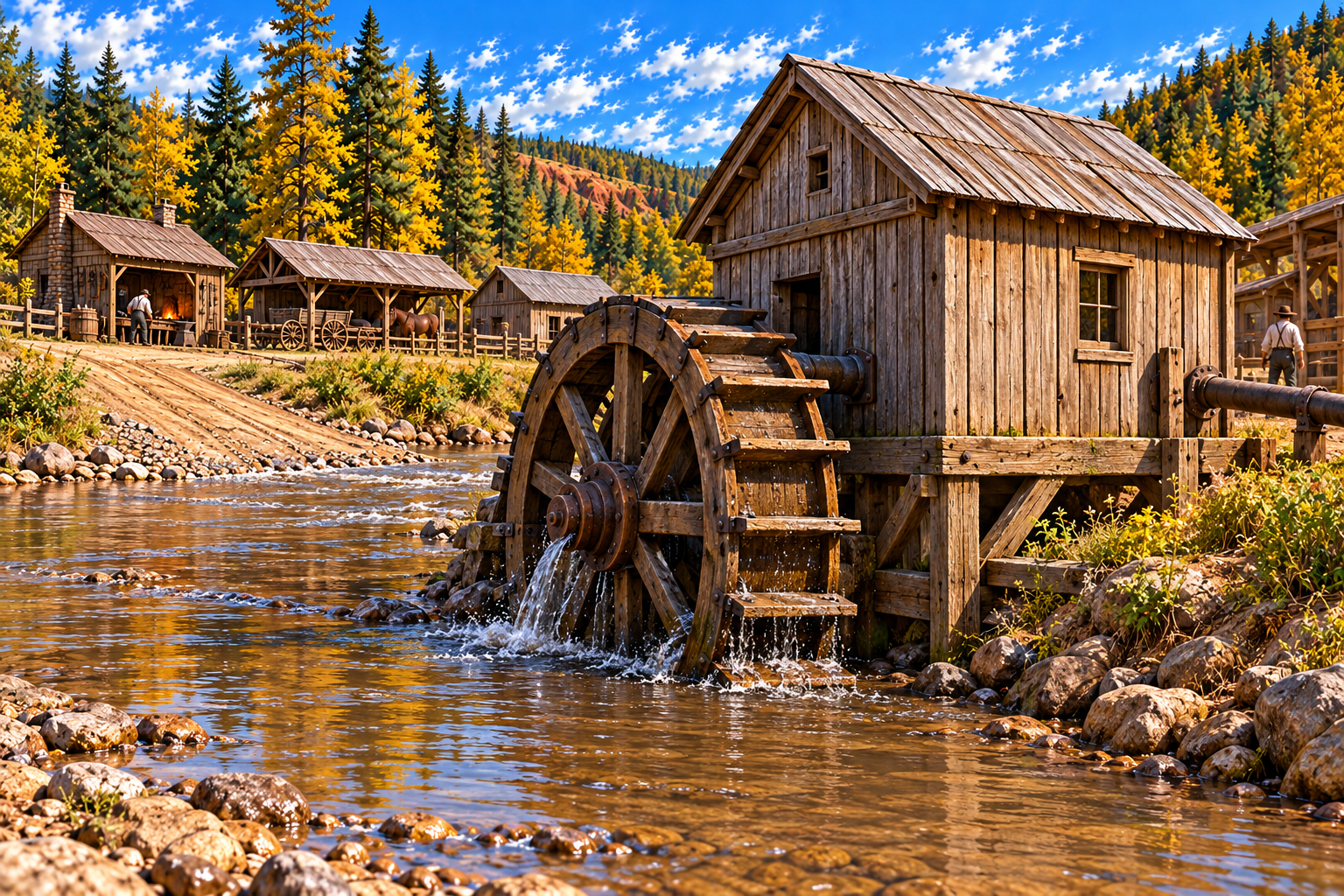
Separate interpretive close-up. The waterwheel-powered supply pump and its pipe are educated guesses, not documented machinery. Tap the picture to open and pinch to zoom.
Story Ten
The blacksmith, wagon shop and stables
A broken tool, a thrown horseshoe or a damaged wagon could interrupt work throughout the furnace complex. In his shop, the blacksmith made iron fittings, repaired iron wheel rims and mended tools. Nearby, a wagon maker maintained the vehicles that carried raw materials and pig iron. Then there were the stables, where horses, mules and perhaps oxen were sheltered. An 1866 survey identifies these support facilities. It draws them across the creek from the furnace, but later archaeology suggests that their locations may have been closer to the furnace itself.
Find this story in the landscape · Sources and Evidence
Inspect the pump house and west-bank workshops
Separate interpretive close-up. The waterwheel-powered supply pump and its pipe are educated guesses, not documented machinery. Tap the picture to open and pinch to zoom.
Story Eleven
A Company Store and Scales
The store and scales connected iron production with everyday needs. An 1866 survey places both on the east bank, near the furnace and dwellings. Scales weighed raw materials and the finished pig iron. Workers could visit the company store for food, tobacco and other household goods, although its exact stock is unknown. Archaeologists found broken dishes, glass, buttons and suspender clips near the remains of homes. They’re small clues about the everyday lives of people who lived near the furnace.
Find this story in the landscape · Sources and Evidence
Inspect the pig iron, wagon and company store
Separate interpretive close-up. Shelter, equipment and loading arrangement are imagined, not measured archaeological evidence. Tap the picture to open and pinch to zoom.
Story Twelve
Riverborne Deliveries
Flatboats moved freight along the shallow Licking River. Their crews carried goods, including pig iron, toward Newport and Cincinnati. Wagons could haul iron from the furnace to a river landing. Once loaded onto a flatboat, the iron might reach a foundry, forge or machine shop in Cincinnati within a week or two, depending on the river.
Find this story in the landscape · Sources and Evidence
Inspect the pig iron, wagon and company store
Separate interpretive close-up. Shelter, equipment and loading arrangement are imagined, not measured archaeological evidence. Tap the picture to open and pinch to zoom.
Story Thirteen
Ready for Market
Fresh pig iron could rust, but it was raw material for further processing. Moving a heavy pig was easier when it was dry and free of mud. At some furnaces, cooled pigs weighing more than 50 pounds were stacked in the casting house until they could be shipped. In our scene, workers stack them on stout wooden sleepers beneath a modest roof, ready for the wagon.
Find this story in the landscape · Sources and Evidence
Inspect the pig iron, wagon and company store
Separate interpretive close-up. Shelter, equipment and loading arrangement are imagined, not measured archaeological evidence. Tap the picture to open and pinch to zoom.
Story Fourteen
Creek or Sewer?
Typhoid, a deadly disease spread through drinking water contaminated with human feces, claimed lives in Bath County. By 1873, physicians were connecting the disease to contaminated water. Wells supplied drinking water, and privies kept human waste in pits—but a poorly placed privy could contaminate a well. At a busy furnace complex, human and animal waste, muddy runoff and industrial refuse could pollute Clear Creek. The creek served industry, but where did workers find water fit to drink?
Story Fifteen
The Furnace Goes Cold
After the Civil War, America’s industrial growth hit high gear. Large ironworks and steel mills expanded around Pittsburgh. Its ironmakers found they could make excellent coke using nearby coal. Meanwhile, some ores gathered for Clear Creek contained troublesome impurities. Pittsburgh was also a transportation hub. Railroads and riverboats delivered raw materials and carried iron to distant markets. When iron prices fell, the high cost of shipping pig iron made competition harder for Clear Creek. Even after retooling, the furnace could not stay in business. Its last pig iron was made in 1875.
Find this story in the landscape · Sources and Evidence
Inspect the furnace and casting floor
Separate interpretive close-up, not a measured enlargement of the panorama. Tap the picture to open and pinch to zoom.